Piping Plovers on Fort Desoto Park Beach

Signs at Fort Desoto Park alert visitors to the presence of Piping plovers

On a Thanksgiving Day trip to Fort Desoto we encountered this sign as we were about to cross the wooden footbridge to North Beach. Of course I wanted to see an actual Piping plover, since I can’t recall ever noticing one before. Not that I’d been looking or anything, but since they are here, I ought to at least try to see them. Didn’t see any Thanksgiving afternoon, so I came back two days later, in the morning.

Sure enough there were several on the North Beach mud flats. They are quite small and got spooked when a much larger Black-bellied plover swooped onto their turf. I found it easy to observe them by sitting down quietly in the mud. They came fairly close. Even so, they are so small that I had to use my digital zoom to get the photo below (cropped), so the photo quality isn’t going to win me any awards, but it works for the web.
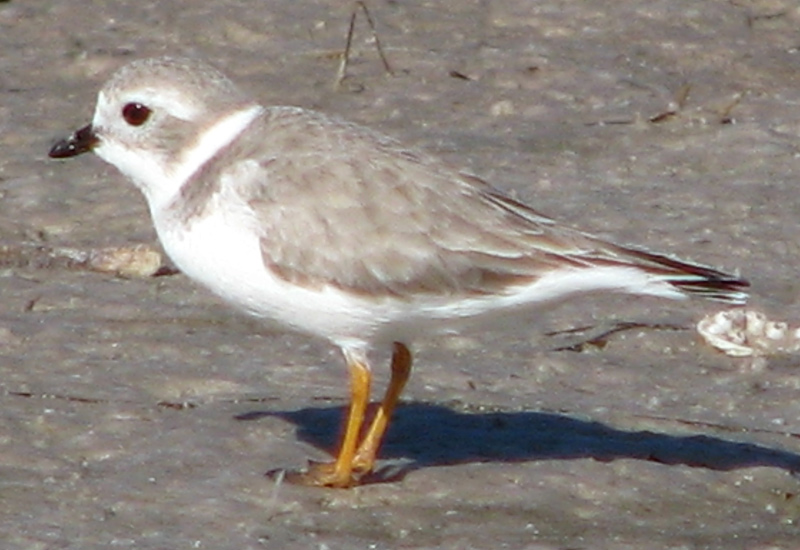

Piping plover on Fort Desoto's North Beach

Tags: , , ,

3 Responses to “Piping Plovers on Fort Desoto Park Beach”

  1. Kevin says:

    Those plovers are neat little birds. Up at Anastasia State Park they’ve got a bunch of Wilson’s Plovers there.

  2. glacial says:

    Great article and picture of a plover. I love plovers, but always viewed them as more slender birds. Surprised to see how chunky they are. Do you know what they feed on? I would be genuinely interested to know. I am trying to write little parables about the intersection of natural phenomena and the current economic crisis. There is something about the behavior of the plover that makes me think I can work it into a little story about the ebb and flow or markets and following market bubbles. The plovers are cute, of course, the market mess we are facing is not. Write to me please about plovers and what the eat. Or, maybe give me some good references.

    Thanks
    Michael

  3. beachhunter says:

    Plovers are relatively small birds, but size varies between species. The piping plover is about 6.5 inches long, and the black-bellied plover is about 11 inches long. Plovers tend to have a short neck, which I think makes them look more stout than they are. Skinny in appearance they are not.

    Plovers eat a variety of foods depending on where they are. They are migratory birds. According to The Shorebird Guide, (O’Brien, Crossley, and Karlson) some breed along North American coastline, while others breed on inland prairies. They may winter in the southern US, central and south America, and the Caribbean.

    Typical piping plover foods, per The Shorebird Guide, are “terrestrial and aquatic invertebrates, including marine worms, insects, mollusks, and crustaceans.”

    Birds like the American Golden Plover which spend a lot of time in inland areas, eat “adult and larval insects, spiders, small mollusks, and crustaceans…berries, seeds, and leaves.”

    Each species has different feeding behaviors and tools: different lengths and characteristics of leg and bill, food preferences, and habitat preferences. Some like mud flats; some prefer sandy beaches.

Leave a Reply