Archive | Birds

Is it a Gull or a Tern? What’s the Difference?
It’s shorebird nesting season again, so when you visit the beach between May and July you are likely to see lots of birds on the beach. Some areas may be marked as bird nesting zones and humans are asked to keep clear so as not to frighten the birds off of their nests. The noisiest […]

Sharing the Beach with Birds
I was disheartened this morning to read a story by Lisa Neff this morning in The Islander newspaper about black skimmer nesting grounds on Anna Maria Island being vandalized three times in the past week during the night. This is the time of year when many of our beautiful beach birds are trying to give […]

Dead Birds Falling from the Sky Becomes Top News Story
Most people don’t pay much attention to birds, probably because people don’t look up very often. We generally don’t have any idea how many birds there are around us at any given time. A big flock of crows might catch our attention, and the classic V-shape of geese in the autumn sky is always worth […]

Black Terns Hanging out on Gandy Beach
Thanks to a post by Ron Smith of USF’s BRDBRAIN listserve, I saw my first black tern today. I’ve lived in Florida all my life and have paid pretty close attention to birds and I’ve seen a lot of terns, but never a black tern. This afternoon Suzie and I took a drive across town […]

Sanderling – Common Shorebirds on Florida Beaches
One of the cutest and most common shorebirds found on Florida’s beaches is the Sanderling [Calidris alba]. It is also one of the whitest. Visible fieldmarks aside, you could identify this bird by its behavior alone. It is a very small bird (8 inches) with short black legs and runs rapidly up and down the […]

Brown Crested Flycatcher Visits Fort Desoto Park
I spent Saturday morning birding at Fort Desoto Park with the friendly folks of the St. Petersburg Audubon Society. We were looking for shorebirds, which turned out to be in short supply. So we turned our attention to having a look for the Brown-crested flycatcher that has been reported in the north beach area for […]

Birding with St. Pete Audubon–Shorebirds at Fort Desoto Park
Shortly after 8 a.m. this morning I found myself standing out on the rather chilly mud flats at Fort Desoto County Park with members of the St. Petersburg Audubon Society, hoping to learn about shorebirds. For a novice, shorebirds are incredibly challenging to identify. But with the assistance of experienced birders I found myself quickly […]

Report Florida Sightings of Banded Shorebirds at BandedBirds.org
Have you seen a shorebird with colored bands or numbered flags on its legs? You can report your sighting at BandedBirds.org. The web site asks for a description on the bands, the location of the sighting, the date and time, the weather, the birds environment, the size of the flock and how many banded birds […]
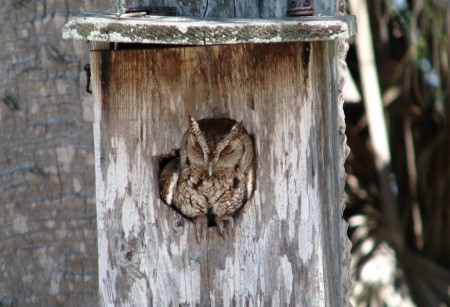
Florida Screech Owls Encouraged by Nest Boxes
Posted by David McRee at BlogtheBeach.com