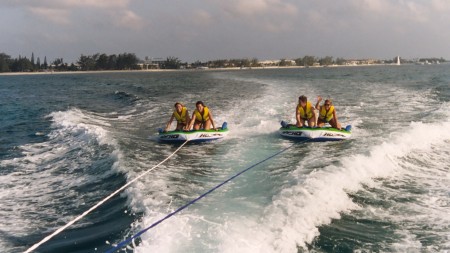
Riding towable tubes at a safe speed.
Note: this is a guest blog post written by Jane Warren.
Summer is almost here, and for those of us who have been cooped up this past Winter–and even Spring–with colder than normal weather and heavy rain, we are chomping at the bit to get outside! My favorite place is the beach, where I can soak up the sun and get out on the boat. This time of year I start to hear from family and friends who are ready to join me. But every year I always take time to remind people of the basic safety guidelines when we are out on the water. I want everyone to enjoy the day, and go home at the end of the day safe and sound.
Here are a few things that we review before getting in the water:
1. Don’t Take Unnecessary Risks.
Water sports enthusiasts are known for being a little on the crazy side and wanting to have a great time in the water. Sometimes people get carried away and push their limits, and then end up getting injured. For example, a skier, or riders on a boating towable wanting to go faster than they should, can get hurt and be unable to enjoy the rest of their time on the water. In addition to taking a hard fall or getting slung off the tube, I’ve seen people hit their heads as they fall, which is very dangerous. I’ve actually had to take two guys to the ER when they fell off, into each other, and hit so hard, that one suffered a concussion, and the other had to get stitches (they were not in my group or on my boat!). So it is important to know your limitations and have fun without taking unnecessary risks.
2. Watch Out For Objects In The Water – Seen and Unseen.
Before you go boating or participate in water sports in a lake or in the ocean, make sure you know the “lay of the land.” This means that you should know the location of boating hazards including reefs, sandbars, shallow water depth, and any areas that should be avoided. Talk to workers at the local marinas, or other boaters, and find out about the safe areas for skiing, tubing, or just cruising around. Stay in approved, navigable waterways. Be on watch for other people in the water; sometimes there are swimmers, snorkelers, and rafters who aren’t paying attention to their location and drift into watercraft traffic areas. Assume the responsibility for the safety of those with you, in addition to others around you.
3. Drinking Alcohol Can Increase Risk Of Danger.
There are plenty of statistics that show a direct correlation between boating and water sport accidents and alcohol consumption. There are many reasons that it is dangerous to drink and then participant in beach activities: your judgment is impaired; you can become dehydrated; you put others at risk. In many areas it is now illegal to drink and drive a boat – the effects of alcohol consumption are increased when out on in the sun, and on the water. Save your drinking for when you get back to the dock or shore. You’ll remember all the fun everyone had, including your own!
4. Know How To Swim.
If you are going to participate in water sports, you should know how to swim. Many people will get out on the water and not have any idea how to swim. Most of us take swimming lessons as kids, but those are usually beginner classes and we stop after completing those first classes. When you spend time on the water it’s a good idea to know intermediate swimming techniques and basic life saving skills. You can get information on swimming lessons at local community centers or YMCAs. Find a list of YMCA aquatic programs available in your area. Knowing how to swim can sometimes mean the difference between life and death.
5. Have Enough Life Jackets For Everyone.
One of the simplest rules of water activities is to make sure that everyone in your group has a life jacket or Personal Flotation Device (PFD). You can’t predict what will happen when you are out boating or during water sports activities. Be prepared and make sure everyone wears a life jacket that fits properly and securely. It’s especially important for children to wear properly fitted flotation devices. Many states now have boating laws that require children under a certain age (for example, 14 years of age or younger) to wear life jackets when on a moving watercraft.
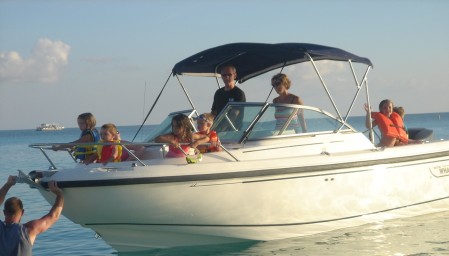
Life jackets are very important for children during water activities.
6. Drink Water And Use Sunscreen.
Dehydration is one of the main causes of sickness for outdoor sports enthusiasts. Typically, people are having so much fun they forget to drink enough water to stay hydrated. When the body is losing more fluid than it is taking in, dehydration results. So have an ice chest full of cold water, and remind people to keep drinking – water!
It is equally important to make sure everyone is wearing sunscreen that has a high SPF rating. Sunscreen is to be applied at least 30 minutes before sun exposure and reapplied after being in the water. Parents should make sure they apply sunscreen to their children every few hours whether they are in and out of the water or not. It’s even better to wear sun protected swim shirts and hats. Wear sunglasses too, to protect your eyes from strong rays, blowing sand or grit.
7. Always Have A Cell Phone With You In Case Of An Emergency.
Anytime you go boating or participate in a water sport someone in your group should have a cell phone or other equipment that allows for immediate communication to emergency providers or the U.S. Coast Guard in case there is a problem that needs immediate attention. Time may be of the essence, so make sure there is a way to contact help if needed. A simple phone call may save a life.
Take the time to be prepared for your day at the beach! Then enjoy the day, and hopefully see a beautiful sunset before you head inside, with plans to return again soon!
About The Author
 Jane Warren is a boater, and outdoor water enthusiast who enjoys swimming, diving, boating, tubing, and just about anything else related to water sports. Depending on the time of year, you might find Jane in Atlanta, Grand Cayman, or some other water based location.
Jane hosts and maintains the site TowableTubesDirect.com. This website provides information and reviews for water sports equipment, with the main focus on towable inflatable tubes. Some of the brands she has reviewed include Sportsstuff, Airhead, Aquaglide, and Rave Sports. When she is in Grand Cayman, there are plenty of family and friends who come to visit. Regardless of their water skills, they can all ride on a big mable tube, which can hold three adults. And everyone wears a life jacket! Safety comes first.