Geotubes in place at Upham Beach
That erosion is a problem on Upham Beach is not in dispute. However, proposed solutions have created an extended debate.
Upham Beach is located at the northern end of St. Pete Beach, which is on an island otherwise known as Long Key. A narrow pass, called “Blind Pass,” separates Upham Beach from Treasure Island to the north. Blind Pass has rock jetties in place on both north and south sides to help “stabilize” the pass. Without stabilization these small natural passes often change shape and depth according to the seasons and weather events.
However, rock jetties create a disruption in water flow that interrupts the natural movement of sand along the beach, resulting in some beaches growing larger, while others continuously lose sand. Upham Beach, near the northern end, continuously loses sand.
This is a problem because several condominiums are situated at that location. It is not a new problem, but has existed since the condominiums were built in the 1970’s.
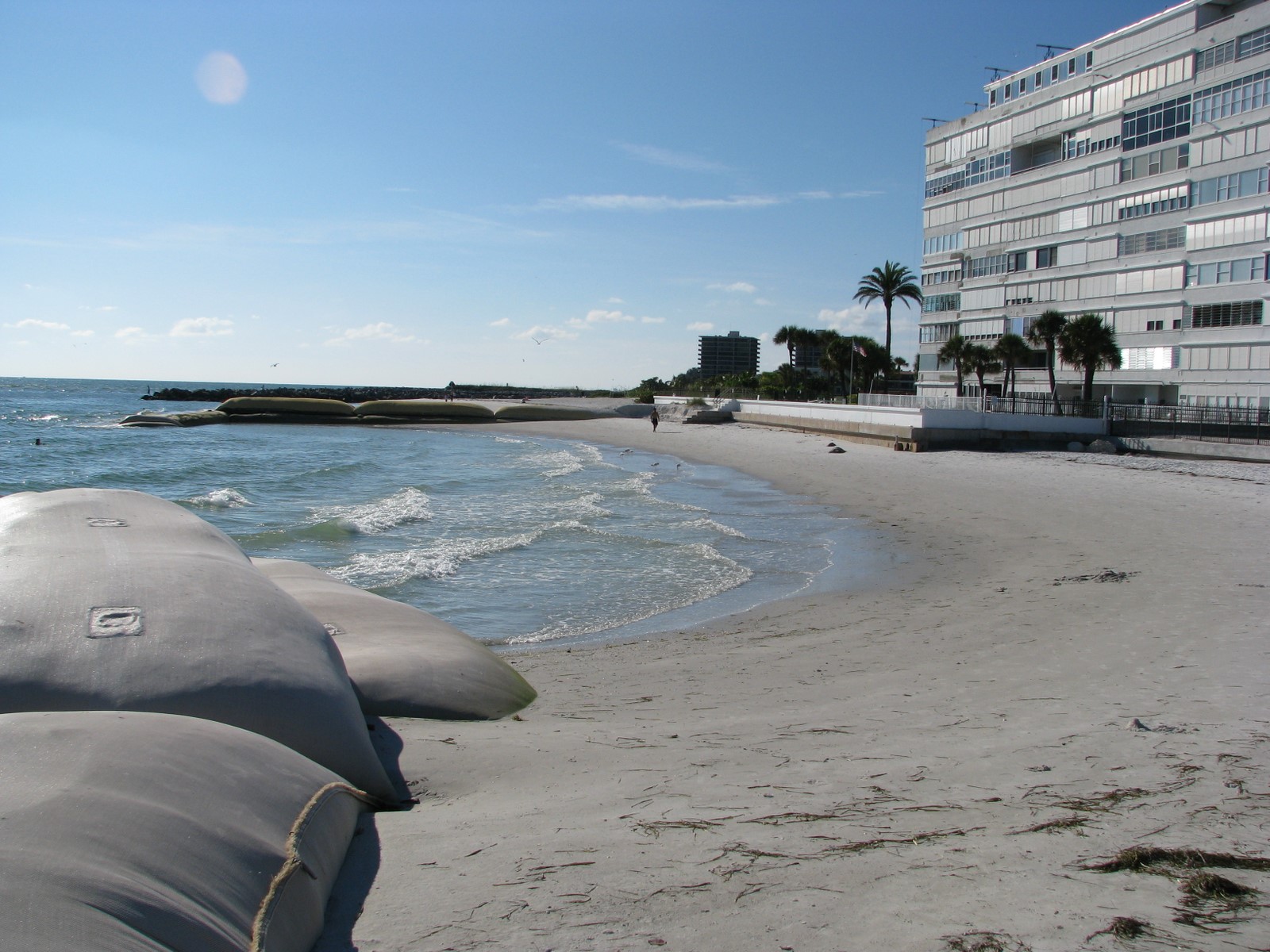
Erosion affects the beach in front of the Upham Beach condominium structures.
A proposal that is currently being supported to reduce the severity of erosion on Upham Beach is that of beach “armoring.” In other words, piling rocks on the beach and in the water in such a fashion as to slow the loss of sand. Since it was unknown how the rocks would actually perform, temporary sand-filled canary-yellow Geotube T-groins were put in place to mimic the effects of rock piles.
The University of South Florida performed a study to measure the performance of the experimental GeoTubes, eventually concluding that they did slow the loss of sand. This seemed to give a green light to those in favor of installing permanent rock piles–a group that naturally included the condominium owners on Upham Beach.
The Suncoast Surfrider Foundation has always opposed piling rocks on the beach and in the water to slow erosion in favor of other less intrusive treatments. Unfortunately it can be hard to overcome the momentum of a local and county government intent on building a rock pile, especially when armed with a scientific study by a local university.
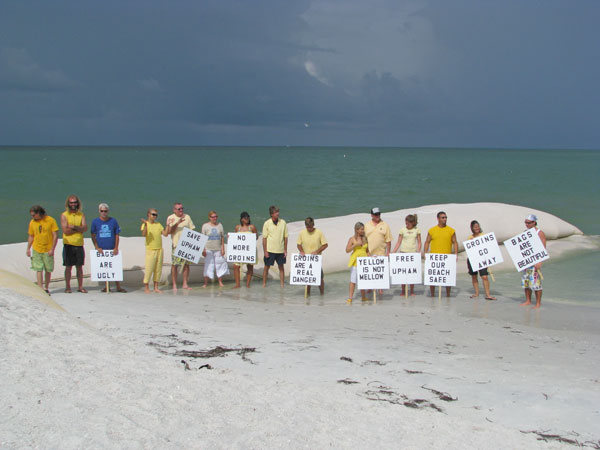
Members of the Suncoast Surfrider Foundation oppose giant rock piles on Upham Beach and would like to see the ugly yellow Geotubes removed.
Surfrider, and others, initially opposed permanent rock structures (armoring) for a number of reasons, including:
- The rocks created a safety hazard.
- The rocks would destroy the waves in a very good surfing spot.
- The rocks would be an eyesore.
- The rocks would limit public access and enjoyment of the beach.
- The rocks might inhibit turtle nesting.
- There was no proof that the rocks would actually work.
- Other methods of dealing with beach erosion are available.
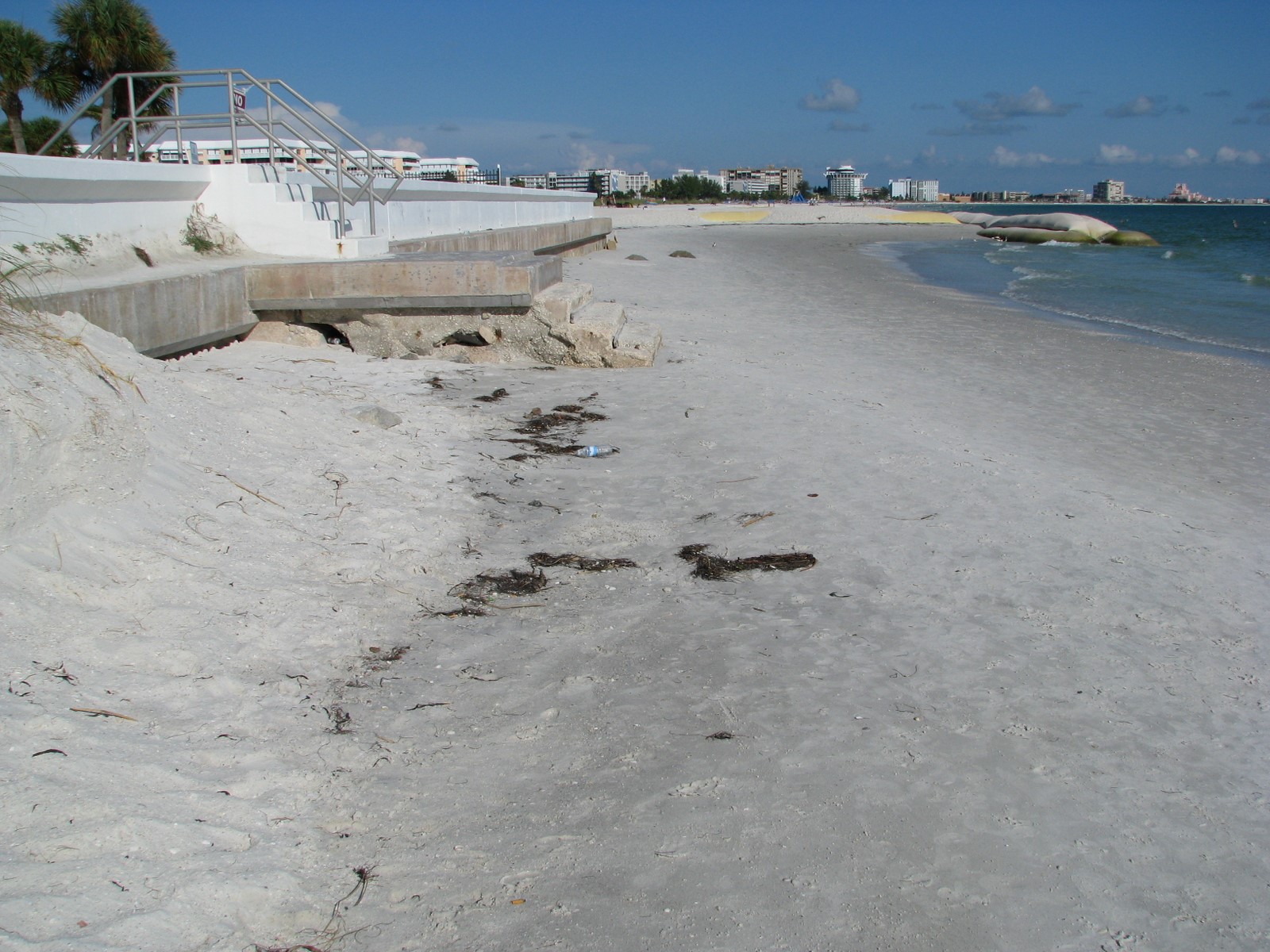
Erosion on Upham Beach.
Once the USF study was presented to Pinellas County, any consideration of approaches other than rock piles seemed to fall by the wayside.
Not convinced, Surfrider commissioned an independent consultant and two peer reviews to examine the USF study to see if it the methods and data it used actually supported the conclusions it drew. Lo and behold, the study pointed out what appear to be some very serious flaws in the USF study. You can read all the details and documents on the Surfrider web site, so I won’t drone on about them here. But I’ll give you a taste:
- The USF study failed to establish and maintain control sites for an interval of time sufficient to capture background or prevailing conditions including variability introduced by chance events like storms.
- The USF study did not collect a “pre-impact” data set to establish shoreline behavior during prevailing conditions before the Geotubes and sand fill were installed.
- The USF study was not designed in such a way that the data collected could be used to separate the effects of Geotube T-groin construction on the shoreline from the effects of as many as five other shoreline construction projects.
The independent consultant concluded that only two conclusions could be supported by the USF study:
- Some erosion occurred after the 2006 renourishment, and
- Shoreline changes in the project area were cyclic in response to seasonal weather conditions.
Further, the consultant writes: “I find their [USF’s] favorable assessment of groin field performance in slowing erosion while not impacting the
adjacent downdrift beach is not substantiated by the USF data.
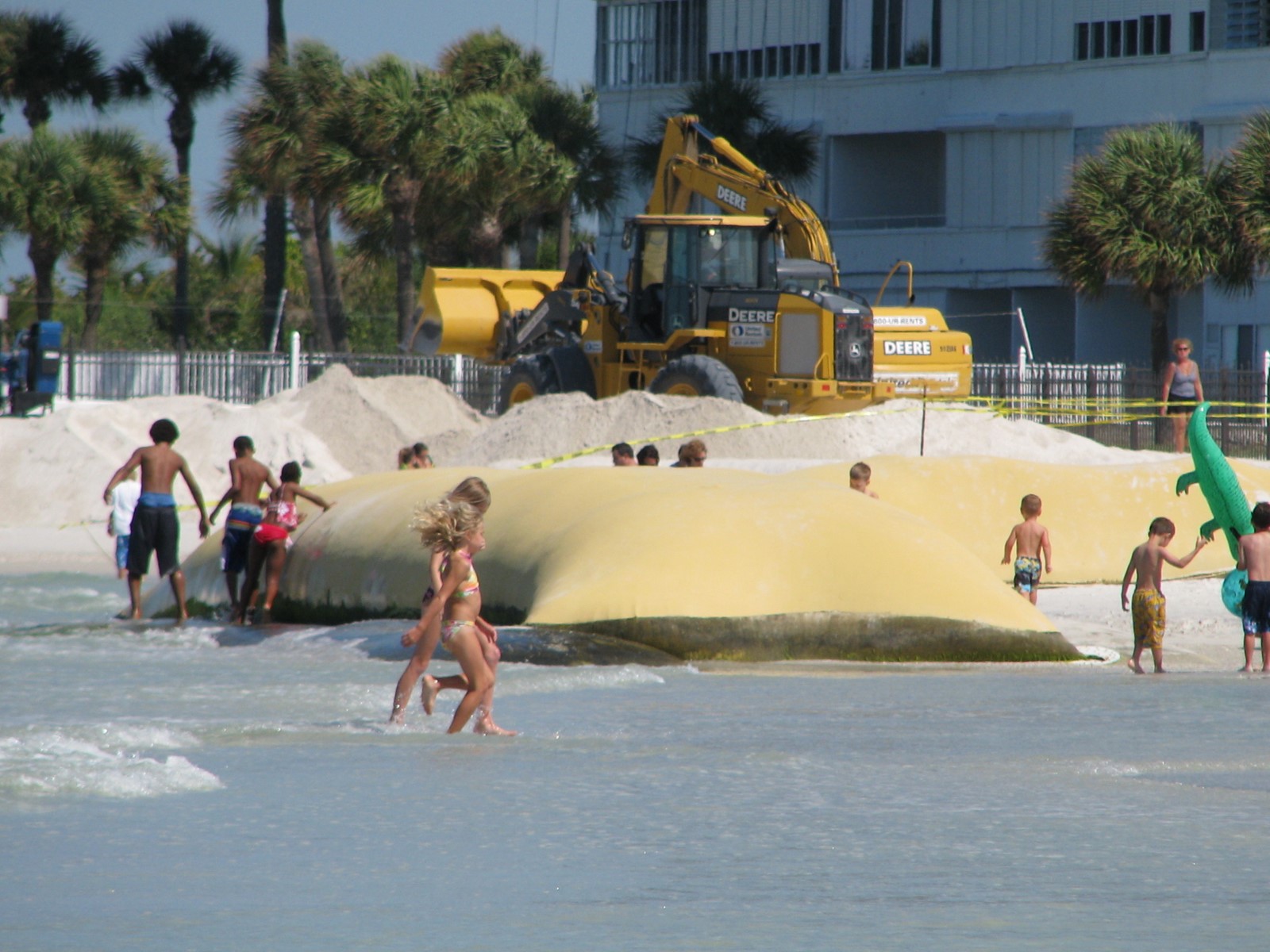
Upham Beach during the T-groin project.
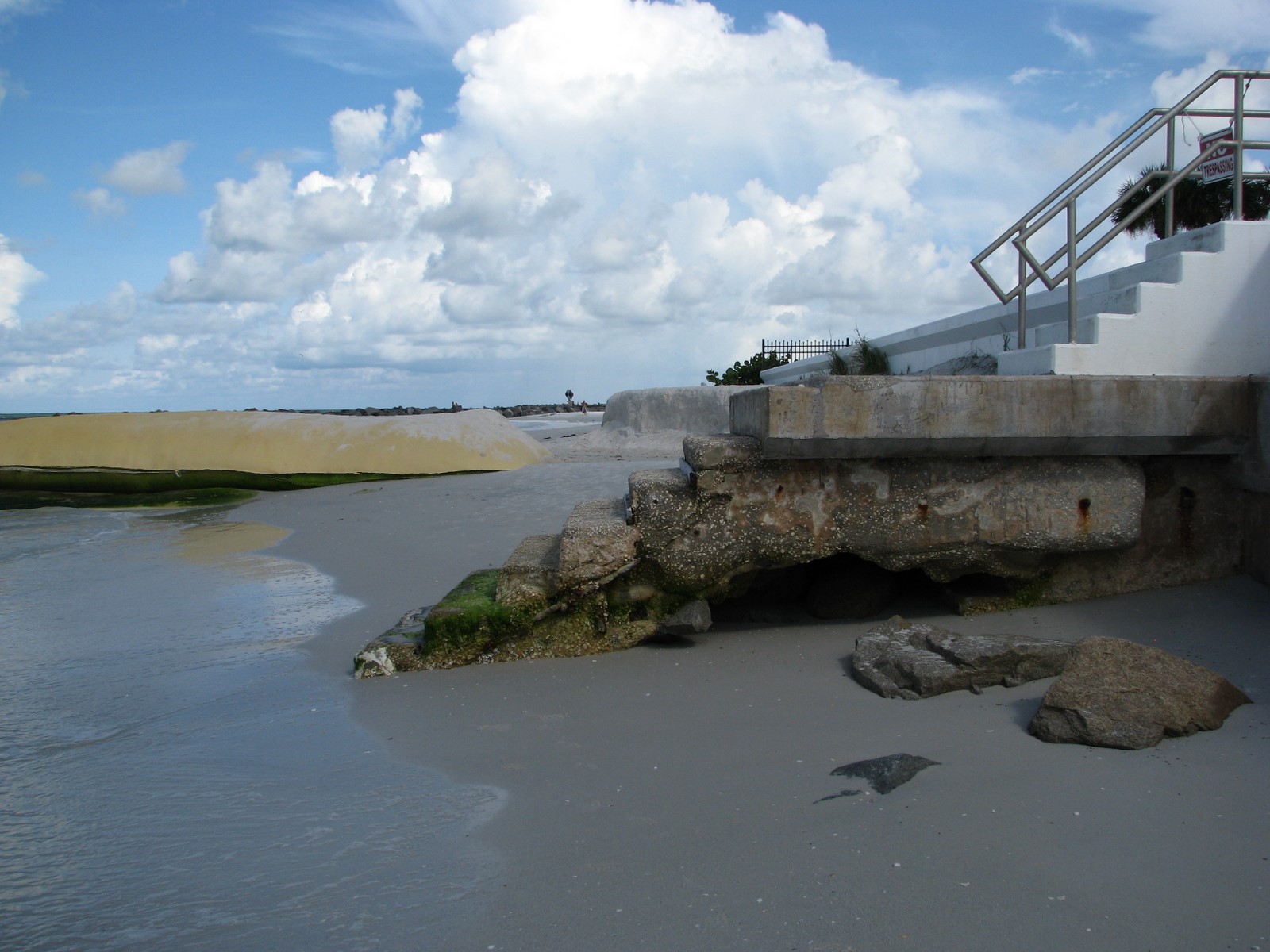
Here the beach is totally eroded in front of the condominiums on Upham Beach, exposing the foundation of the stairs. You can see the yellow Geotube T-groin situated uselessly, half under water.
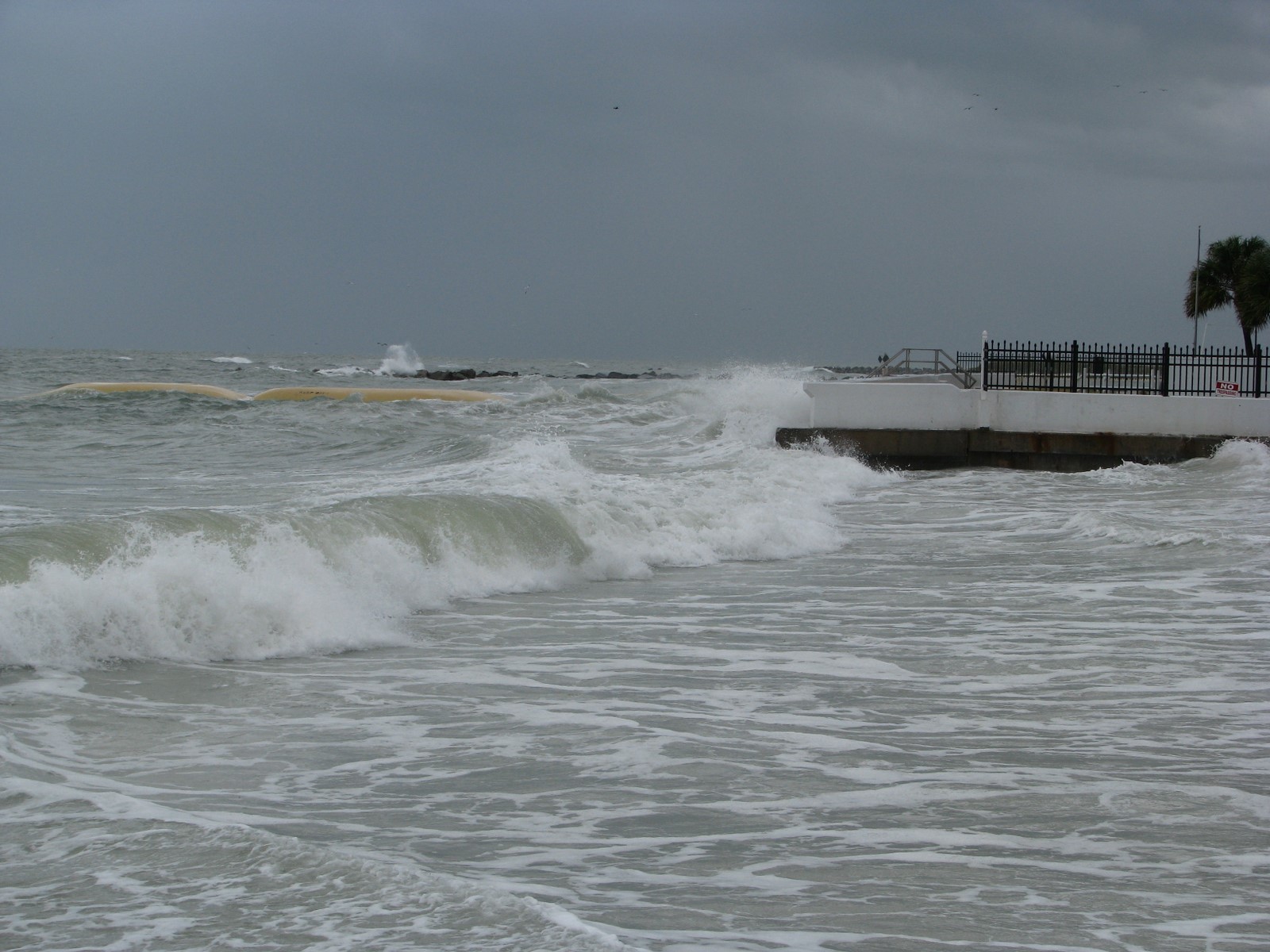
During the passage of Hurricane Ike, it can be seen that the T-groin had no effect on the long period wave of the small storm surge. Surf pounded the seawall of the condominium.
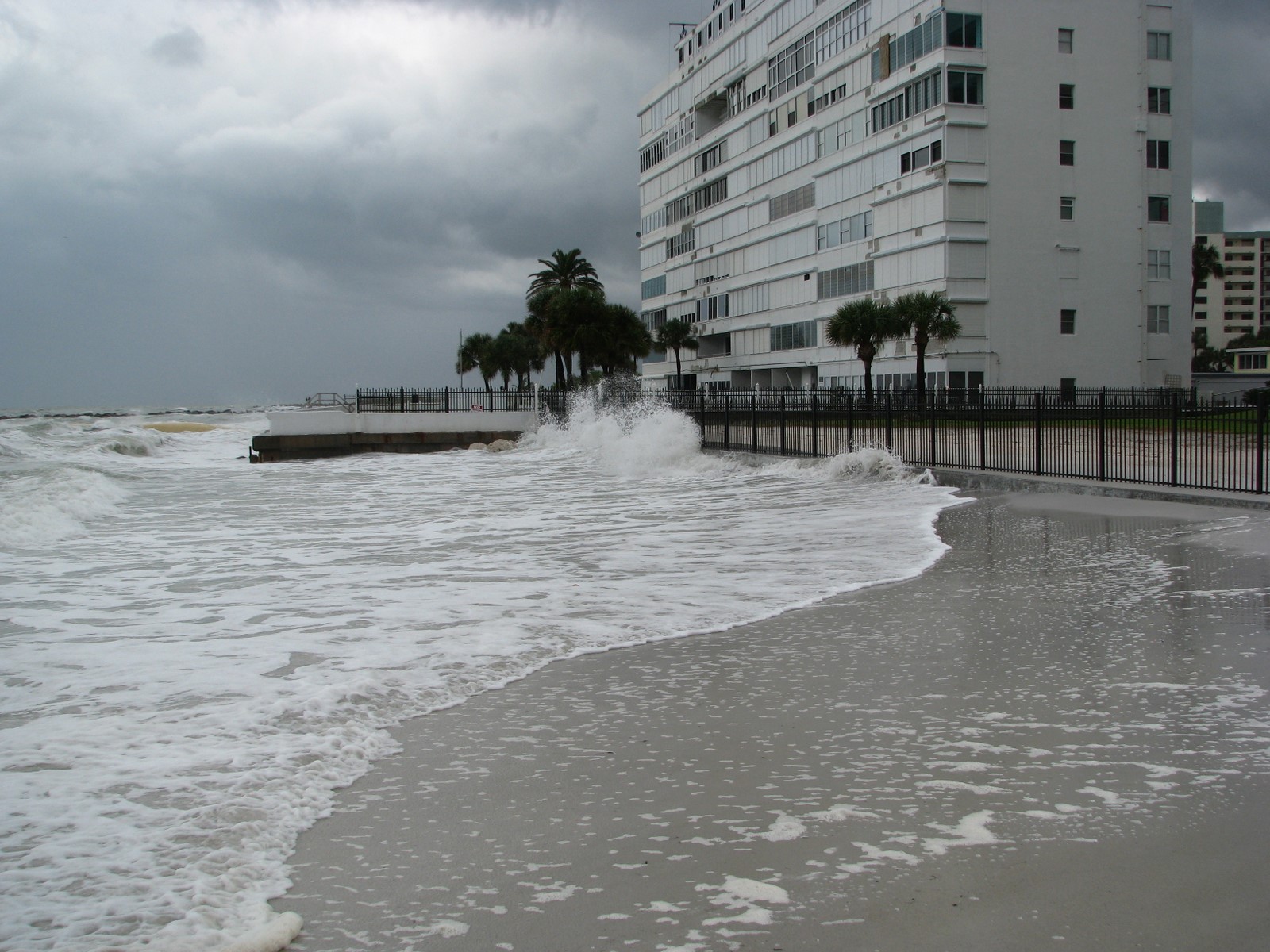
Storm surge on Upham Beach from distant Hurricane Ike in the Gulf of Mexico.
Considering the criticisms of the USF study upon which the decision to install rock piles is based, Surfrider has written to the Department of Environmental Protection asking that the Geotube T-groins be removed and that rocks not be placed because the beach armoring project will:
- Destroy or Degrade Public Trust Resources
- Benefit a very small group of people
- Create a nautical hazard
- Adversely impact turtle hatchling success
- Diminish the natural beauty of beaches
- Be a danger to public safety due to exposed rocks
- Not be a long-term solution to the real problem of coastal erosion
- Result in “Significant Adverse Impacts”
- Has Failed to meet Experimental Design Qualifications
Find out more details and read the source documents at the Suncoast Surfrider Foundation web site. They have suggestions as to how YOU can help, too.
Related posts on this blog:
Free Upham! Surfrider Wants Geotube Removal
Surfrider’s Upham Beach Cleanup
Thoughtful comments are welcome, including comments in defense of the USF study. All comments are moderated, so your comment may not appear until I have a chance to read it and approve it.